Winter
The PeasantsWinter is both the title and the organizing season of the novel’s second volume: it changes the conditions under which Lipce lives and gives the surrounding conflicts a harsher physical and temporal setting. The season does not begin at a clean boundary. Late autumn first empties the village of sound and color; then gales and snow close roads, press people indoors, and make survival depend on household stores, labor, and mutual action. By the time March arrives, winter’s severity has become a measure of what the people have endured, even as rain and thaw bring a different kind of hardship.
A season at the threshold
The volume follows Autumn and opens after the death of Kuba, turning from one seasonal frame to another at a moment already marked by loss. Winter is initially an approach rather than a settled condition: autumn is still struggling against it, and scattered snow has yet to make the change complete. This suspended beginning matters to the volume’s structure. The weather advances in fits, while the people of Lipce continue their work and obligations under the threat of what is coming.
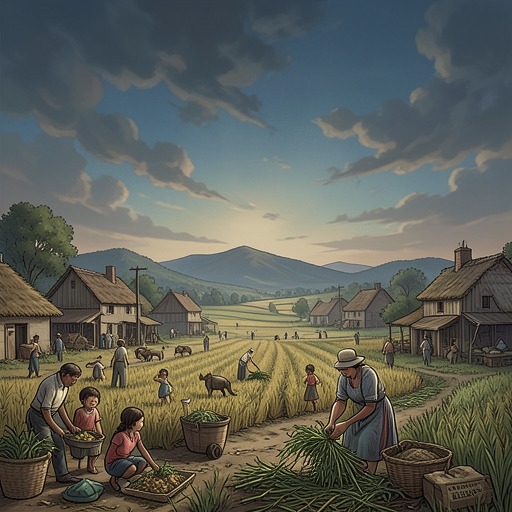
The late-autumn village is already depleted. Its fields lie stripped and exhausted; the wind sounds in the thatch, drizzle blurs the panes, and the repeated thud of flails in the barns grows louder. The description makes seasonal change social as well as natural: the village seems to lose animation along with the land. The approaching cold is not simply a picturesque backdrop but a pressure on a community that must prepare for it while resources are running short.
Before Yuletide, Lipce looks toward the fair on St Kordula’s Day as both a practical necessity and a rare occasion drawing the village together. Residents debate what to sell—cattle, grain, or smaller livestock—and what they must buy, including clothing, tools, and farm supplies. Taxes, commune contributions, debts, pre-harvest loans, and payments to servants all come due together. Even households with fifteen morgen calculate anxiously and consider taking a horse or cow to market; for poorer residents, the choices are more severe. The seasonal calendar thus exposes the unequal capacity of villagers to meet the same winter.
Storm, snow, and enclosure
The weather moves from warning into ordeal. A gathering of birds overhead is read by the villagers as a sign that a hard winter is coming and snow is near. Their response combines observation, melancholy, and religious protection: they watch the flocks vanish toward the woods, make the sign of the cross, and then turn toward church as the bells continue to toll. Nature is not presented as mute scenery; it is read through local knowledge and belief, with the changing sky carrying a warning the community recognizes together.
The gales then persist for nearly a week. Days are difficult enough to keep all but those compelled by necessity at home; the nights are worse, with repeated crashes and rumblings that prevent sleep. Gusts strike cottage walls, shake the eaves and doors, and break windows. Residents rise in the night to stuff the openings with pillows, yet the wind still forces cold inside. Winter’s violence reaches the household itself, testing the small protections people can assemble against it.
Snow deepens the enclosure. It falls for two days and two nights, burying cottages until they resemble haystacks and leveling the roads with the fields. Gardens, the pond, and familiar routes disappear beneath an unbroken white surface. At first the storm makes ordinary movement impossible: sleighs turn back, and people must dig paths between cottages and clear doorways and byres. The landscape remains beautiful in its whiteness, but that beauty is inseparable from obstruction and exposure.
When the snowfall eases, the village briefly becomes lively again. People clear paths, children play in the drifts, and dogs race through the yards. Rocho suspends lessons because the children cannot be kept at their primers. The episode gives winter a changing rhythm rather than a single unbroken mood: after the storm’s silence and confinement comes an exuberance made possible by the snow itself. Yet the reprieve is limited. Roads remain impassable, and the snow continues to shape daily movement after it stops falling.
Household life in the cold
The Christmas Eve landscape gathers winter into a scene of intense stillness. A renewed frost coats the trees after several days of damp mist, and pale sunlight falls over snow-covered fields without warming them. Breath steams in the air; the fields are quiet, and the few movements visible—a bird crossing the snow, partridges near the bushes, a hare trying to reach grain—draw attention to how difficult it is for life to find sustenance. Even distant bells and sleigh sounds quickly disappear into the cold.
This seasonal setting bears on the volume’s human conflicts without reducing them to weather. The cold makes shelter, food, work, and household dependence more immediate, while the long nights and restricted movement concentrate attention on family and desire. The winter volume places the strained relationship between Antek Boryna and Hanka Borynowa, and Antek Boryna’s attachment to Jagna, within a world where choices have material consequences and where private distress unfolds amid communal pressures. At Christmas, the landscape’s frozen quiet surrounds the characters, but it does not resolve their tensions.
The labor of survival also continues in altered forms. Antek Boryna is taken on at the sawmill during this volume, a change in work set against the season’s difficulty. The narrative moves between household need and work outside it, showing that winter does not suspend economic life: it changes the terms on which people can earn, travel, and maintain their households. The conditions that have already made the fair necessary persist in the background as the weather makes everyday tasks harder.
Winter as narrative frame
The volume’s seasonal imagery repeatedly connects changes in weather to changes in the village’s collective attention. A public alarm or personal crisis may stir Lipce intensely, but ordinary concerns return, and people resume their daily rounds. Weather can hasten that ebb: the foul conditions of March help the village’s earlier fire recede from conversation, as residents turn back toward the cares each day brings. The season therefore shapes not only what people endure but also what remains visible in communal memory.
Winter is not simply a pause between harvest and renewed growth. Its storms and snow create a prolonged interval in which work, scarcity, and conflict continue under strain. The volume’s movement from late-autumn preparation through violent weather, Christmas cold, and March rain gives the season a narrative arc of its own. That arc is not a smooth passage from hardship to relief: snow first seals the village in, then melting snow and rain swamp furrows, lowlands, and farmyards, while night frost makes paths treacherous. The end of deep winter brings mud and flooding rather than immediate ease.
The turn toward spring
By the thirteenth chapter, spring is in the air, although the days remain damp, chilly, foggy, and unsettled. Daily sleet and rain keep people indoors; water gathers in the furrows and spreads across low ground and farmyards, and night freezes make roads and paths difficult to stand on. The light, too, remains uncertain, appearing only briefly before clouds, mist, and renewed squalls close over the land again.
This transition completes the volume’s account of winter without pretending that the season ends cleanly. The snow’s disappearance does not restore the village at once: it leaves mud, standing water, and unstable roads in its place. Seasonal change is therefore a change of conditions, not a simple cure for hardship. As the second volume turns toward spring, the people of Lipce remain bound to the same cycle of work and necessity, carrying forward the consequences of what winter has exposed and intensified.